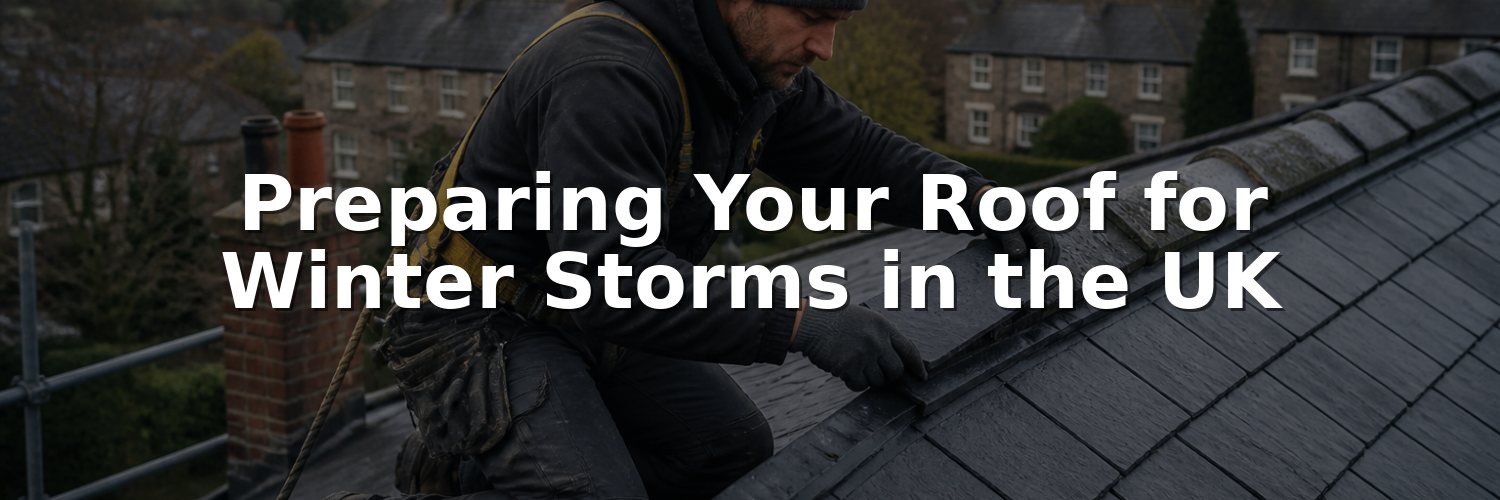
Winter storms in the UK bring heavy rain, strong winds, snow and freezing temperatures that test every roof. A few targeted checks and simple repairs now can prevent expensive emergency work later. This guide explains practical, season-specific steps property owners and managers can take to make roofs storm-ready.
1. Conduct a thorough roof inspection
Start with a careful survey of the roof surface, gutters and roofline. You can arrange a professional inspection—Roofing, Roofers and Roofs offers roof surveys and drone roof inspections—but you should also perform basic checks yourself.
- Visible damage: look for cracked, loose or missing tiles and slates, lifted flashing around chimneys and roof penetrations, and corrosion on metal roofing.
- Gutters and downpipes: ensure gutters are clear of leaves and debris and check for sagging or splits that impede drainage.
- Flat roof checks: inspect for ponding water, blistering, splits or loose torch-on and coverings common on flat roofs.
- Loft inspection: from inside, check for daylight through roof boards, damp patches, black mould or insulation that’s been displaced—early signs of leaks.
2. Fix the small problems before they become emergencies
Minor defects left through winter often escalate when wind-driven rain or freezing-thaw cycles strike. Prioritise repairs that reduce leak risk and wind uplift.
- Replace slipped or missing tiles and secure ridge and hip tiles.
- Repair or replace damaged flashing around chimneys, skylights and valleys. Poor flashing is a common cause of winter leaks.
- Reseal or patch small holes on flat roofs (EPDM, GRP, bitumen) to avoid ponding and freeze damage.
- Fix gutter joints and downpipe connections so runoff is directed away from the building.
3. Improve drainage and gutter performance
Blocked or damaged gutters increase the chance of water backing up under eaves and soaking into timber and walls. Good drainage is especially important during heavy seasonal rainfall.
- Arrange professional gutter cleaning and, where needed, minor repairs or replacement to ensure water flows freely.
- Consider leaf guards or larger-capacity downpipes on trees-facing elevations to reduce future blockages.
- Check and adjust fall on flat roofs or install additional outlets if ponding persists.
4. Protect vulnerable elements: chimneys, valleys and rooflights
Certain roof features attract water and wind. Taking extra care of them reduces the chance of winter damage.
- Chimney flashing: damaged flashing is a frequent leak source—repair or renew leadwork or step flashing before winter storms.
- Valleys: clear valleys of debris and check that valley linings are intact and watertight.
- Rooflights and skylights: inspect seals and frames for gaps and re-seal where necessary to prevent drafts and leaks.
5. Improve insulation and ventilation to reduce condensation
Cold weather can increase condensation problems, which in turn cause damp, rot and reduced thermal performance. A well-ventilated, insulated roof space helps keep the structure healthy.
- Ensure loft insulation is correctly installed without blocking eaves ventilation. Top up insulation where needed for better thermal efficiency.
- Check vents (ridge, soffit, and mechanical where fitted) are clear and functioning to prevent warm, moist air reaching cold roof surfaces.
- Address signs of condensation early—mould or damp patches on loft timbers mean ventilation or insulation needs attention.
6. Prepare for storm damage and emergencies
Even with good preparation, extreme weather can cause sudden problems. Plan how you will respond to minimise damage.
- Know where to find roof surveys and emergency repair services locally: Roofing, Roofers and Roofs offers emergency call-outs and rapid leak detection.
- Keep basic materials handy (tarpaulin, roofing nails, sealant) and a list of trusted contractors for quick temporary covers.
- Photograph your roof beforehand; records assist insurers and loss adjusters if you need to claim after a storm.
7. When to call a professional
Complex repairs, high roofs, asbestos-containing materials or extensive storm damage require an experienced roofer. Professionals use safe working methods and specialist tools to deliver durable, compliant repairs.
- Contact a professional for roof replacement, structural reinforcement, major flashing repairs or when you suspect water has reached timberwork.
- For flat roofs, work with contractors experienced in EPDM, GRP or bitumen systems to ensure long-term waterproofing.
- Consider a drone roof inspection for hard-to-access areas; it’s a fast, safe way to assess storm damage accurately.
Seasonal preparation protects your property and reduces repair costs during and after the winter. For tailored advice and professional inspections in your area, Roofing, Roofers and Roofs can help with free quotations, emergency repairs and maintenance plans. Find more local guidance for flat roofs in Bristol and tips on fixing roof leaks in Northampton to help plan work before storms arrive.
https://www.rooferquotes.co.uk/site/flat-roofs-bristol/
https://www.rooferquotes.co.uk/site/northampton-roof-leaks/