Whether you’re planning a repair, a re-roof or a full replacement, roofing costs can feel unpredictable. This guide explains the main elements that drive price so you can budget sensibly and choose appropriate options for your property. Roofing, Roofers and Roofs provides a range of services and this article highlights what affects cost across those services.
1. Type of job: repair, re-roof or full replacement
The scale of the work is often the single biggest cost driver:
- Minor repairs and emergency fixes (missing slates, isolated leaks) usually cost less because labour and materials are limited and the roof’s structure is retained.
- Re-roofing (renewing covering layers while keeping structure) is more expensive than repairs but cheaper than a full strip-and-rebuild: useful when timbers and insulation are sound.
- Full replacement or structural reinforcement involves stripping to the deck, replacing timbers or insulation, and installing new coverings—this is the highest-cost option because of materials, labour and waste removal.
2. Materials chosen
Material selection affects both material cost and installation complexity:
- Asphalt shingles and basic tiles are often cost-effective and quick to fit.
- Natural slate, clay tiles or standing-seam metal carry higher upfront costs and require specialist skills, but they offer longer lifespans and low maintenance.
- Flat-roof materials (EPDM rubber, GRP fiberglass, bitumen) vary—EPDM can be cost-efficient for large areas, GRP is durable and seamless but needs controlled installation.
- Green roofs, solar-ready installations and high-performance insulation increase project cost but deliver energy savings and higher property value over time.
3. Roof size, shape and complexity
Simple, rectangular roofs are cheaper to work on than roofs with multiple hips, valleys, dormers or skylights. Complications that increase labour and waste include:
- Steep pitches or high eaves requiring extra safety measures
- Multiple rooflights, chimneys and complex flashings
- Long ridges, hips and ornamental features
- Integrated gutters, fascias and soffits that must be replaced or adapted
4. Access, scaffolding and working conditions
Safe and efficient access is essential but adds cost. Consider:
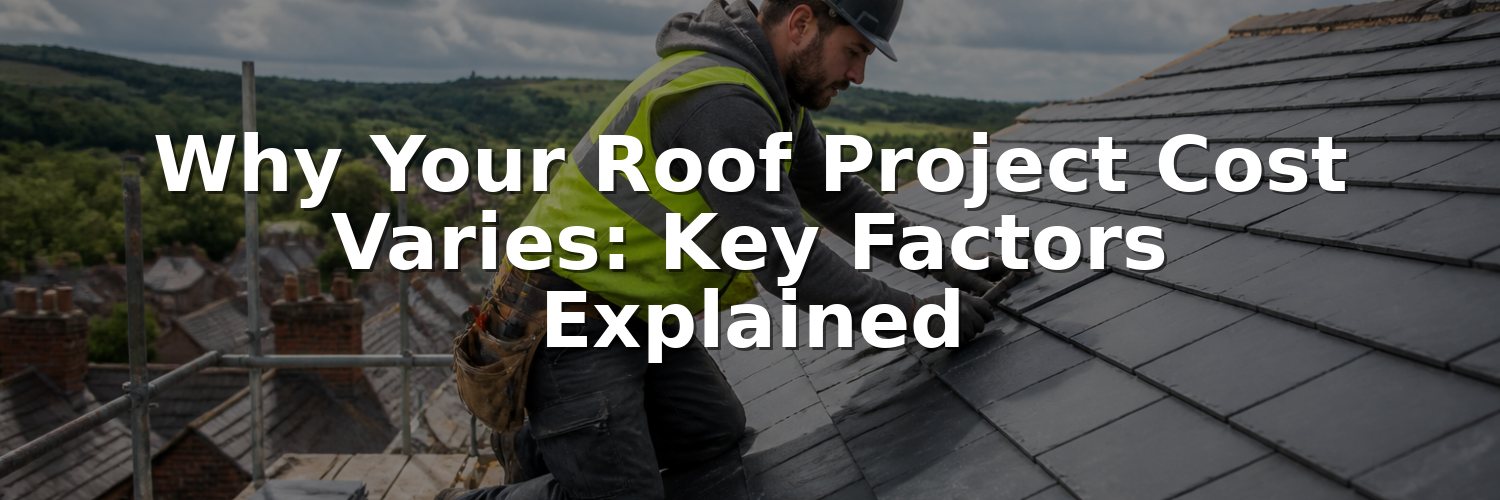
- Scaffolding for multi-storey properties or difficult rooflines—this is a significant, unavoidable cost for safe work.
- Restricted access (narrow streets, conservation areas, tight gardens) may need specialised lifting equipment or traffic management, increasing price.
- Weather and scheduling—UK weather can cause delays; urgent emergency call-outs often cost more outside normal working windows.
5. Structural condition and hidden defects
Once coverings are lifted, roofers may find rot, insect damage, sagging timbers or damp. These hidden defects can change a quote substantially:
- Replacing or reinforcing rafters, joists and battens
- Upgrading or replacing underlay, vapour membranes and insulation
- Additional repairs to chimneys, flashings or roof drainage
To reduce surprises, consider a pre-works survey or a drone inspection carried out by Roofing, Roofers and Roofs.
6. Regulations, planning and listed building requirements
Conservation areas and listed buildings impose constraints that influence cost:
- Specific materials or methods may be required, for example matching original slates or clay tiles.
- Planning permission or listed-building consent adds time and possibly specialist craftwork.
- Building Regulations require certain insulation and ventilation standards on replacements—compliance can add to material and labour costs but improves thermal performance.
7. Additional systems and guarantees
Extra features add value and cost but can be sensible long-term investments:
- Improved insulation and ventilation systems reduce energy bills and condensation risk but increase immediate spend.
- Roof coatings, waterproofing and storm-proofing extend lifespan and reduce maintenance needs.
- Solar panel roof integration requires careful planning and may need structural reinforcement.
- Insurance-backed guarantees and maintenance plans typically increase upfront cost but reduce future financial risk.
Budgeting tips and how to get accurate quotes
Practical steps to manage cost and avoid unwelcome surprises:
- Get at least three detailed quotes that list materials, labour, scaffolding and waste disposal separately.
- Ask for a written survey and a contingency allowance for hidden defects; reputable companies, including Roofing, Roofers and Roofs, will explain likely variables.
- Consider whole-roof upgrades (insulation, ventilation, gutters) when replacing coverings—doing everything together can be more cost-effective long-term.
- Check whether planning or listed-building consents apply and factor in lead times.
- Use a local roofer with experience in your area—specialist knowledge of local weather and building stock reduces risk. For example, homeowners in Bristol can look at local flat roof specialists via flat roofs Bristol, while property managers facing leaks in Northampton might find useful guidance at Northampton roof leaks.
Understanding these cost drivers helps you make informed choices that balance immediate spend with long-term performance. Roofing, Roofers and Roofs works across residential, commercial and specialist roofing sectors and can advise on right-sizing work to meet budget and performance goals.
If you’d like a site-specific survey or a clearer quote breakdown, a proper inspection (including drone surveys where appropriate) will reduce unknowns and give you the best basis for budgeting.