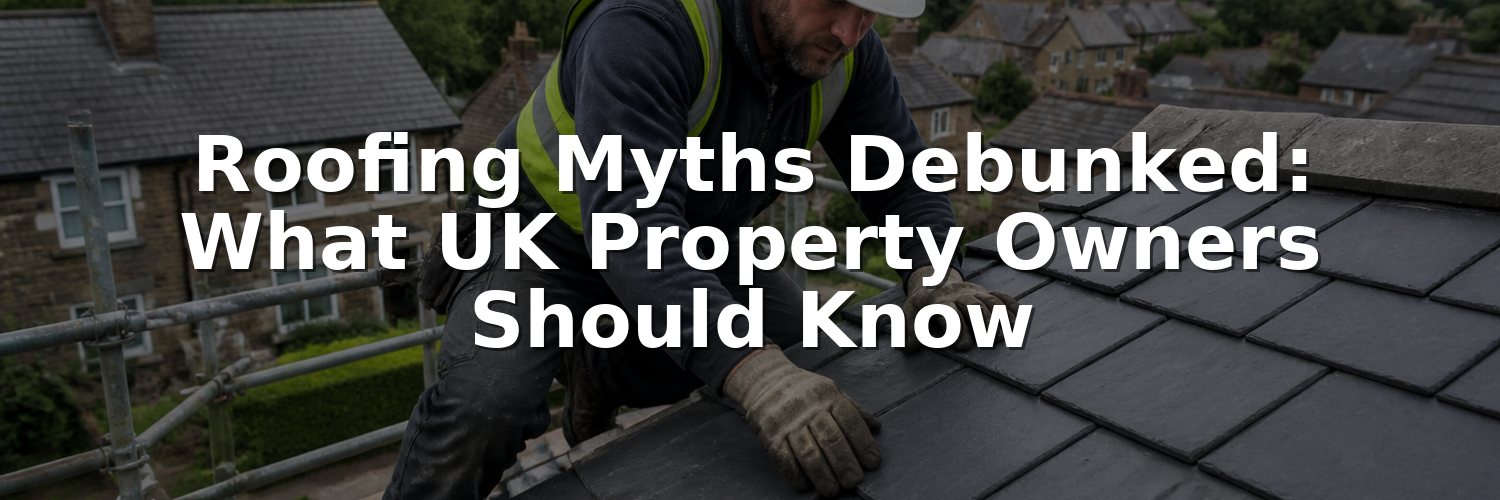
Roofing is one of those home topics wrapped in half-truths. For landlords, homeowners and property managers across the UK, believing myths can lead to unnecessary expense or risky DIY. This post from Roofing, Roofers and Roofs separates common roofing myths from reality so you can make informed decisions about maintenance, repairs and replacement.
Myth 1: “Small leaks can wait — they’ll stop on their own.”
Fact: Even a small leak is a sign of failure in the weatherproofing layers. Left unchecked, water travels along timbers, insulation and plaster, causing rot, mould and structural damage that are far more costly to fix than the original leak. Prompt inspection and targeted repair are essential.
Why prompt action matters:
- Prevents secondary damage such as damp and electrical issues.
- Preserves insulation and energy efficiency.
- Reduces long-term costs by avoiding structural repairs.
Myth 2: “If the tiles look OK from the ground, the roof is fine.”
Fact: Visual checks from ground level miss many problems: slipped underfelt, blocked gutters, failed flashings, damaged leadwork and trapped moss. A proper roof survey, ideally including a close-up or drone inspection, will reveal issues invisible from below.
Professional inspections identify:
- Hidden leaks and weak points.
- Worn weatherproofing on flat roofs and flashings.
- Signs of ageing that signal a planned re-roofing rather than emergency fixes.
Myth 3: “All roofing contractors deliver the same results.”
Fact: Competence varies widely. Specialist knowledge matters — different materials and roof types (slate, tile, metal, flat systems like EPDM or GRP) require specific skills and equipment. Using a reputable local team like Roofing, Roofers and Roofs reduces risk: you gain tradespeople experienced with local weather, appropriate materials and building regulations.
What to look for in a contractor:
- Clear written quotations and scope of work.
- Evidence of experience with your roof type.
- Insurance-backed assurances and safety compliance.
Myth 4: “A new roof always means tearing off everything.”
Fact: Re-roofing strategies vary. In many cases, overlaying new tiles or membranes is viable and cost-effective, provided the existing structure is sound. Conversely, if there’s rot, insulation failure or extensive damage, a full strip-and-replace will be necessary. A professional survey determines the correct approach that balances cost and longevity.
Decision drivers include:
- Condition of the roof timbers and underlay.
- Energy performance goals (insulation upgrades often require removal).
- Planning and conservation requirements for period properties.
Myth 5: “All flat roofs are unreliable and short-lived.”
Fact: Modern flat roofing systems — EPDM rubber, GRP fibreglass, high-performance bitumen or liquid waterproofing — are durable when correctly specified and installed. Longevity depends on material quality, installation standards and regular maintenance. For example, correctly detailed GRP and EPDM roofs can provide a long trouble-free life.
Tips for reliable flat roofs:
- Choose the material suited to load, access and exposure.
- Ensure detailed flashings and good falls to drainage points.
- Schedule routine inspections and gutter checks, especially after storms.
Myth 6: “DIY roof repairs save money.”
Fact: Small DIY tasks like clearing gutters are useful, but roof repairs carry safety risks and technical challenges. Incorrect repairs can invalidate insurance, cause leaks, and cause damage to neighbouring tiles or membranes. Professional teams use safety-compliant equipment, correct materials and industry best practice to deliver lasting repairs.
When to call professionals like Roofing, Roofers and Roofs:
- Any work requiring scaffolding or on steep roofs.
- When flashings, chimneys or structural elements are involved.
- For survey reports needed by insurers, landlords or buyers.
Myth 7: “Roof maintenance is optional — roofs look after themselves.”
Fact: Regular maintenance extends roof life and prevents costly emergency repairs. Seasonal checks for loose tiles, gutter blockages, moss and failed flashings catch small problems early. Many property owners benefit from a maintenance plan that includes periodic inspections and priority emergency call-outs.
Maintenance checklist highlights:
- Clear gutters and downpipes at least twice a year.
- Remove moss and debris with approved methods that won’t damage tiles.
- Inspect and repair flashings, chimneys and rooflights after severe weather.
Further reading and local resources
If you manage properties in specific areas, local roofers and resources can be useful. For flat roof guidance in Bristol see Flat roofs Bristol. For targeted help with leaks in Northampton, the Northampton roof leaks page is helpful. You can also compare local approaches on sites such as https://somersetroofleaks.co.uk for Somerset-specific issues.
Believing myths about roofing risks unnecessary expense and property damage. Use professional surveys, choose suitable materials for your roof type, and arrange routine maintenance. Roofing, Roofers and Roofs can advise on tailored solutions — from leak detection and emergency repair to full re-roofing and energy-efficient upgrades — so you protect value and keep buildings watertight for years.