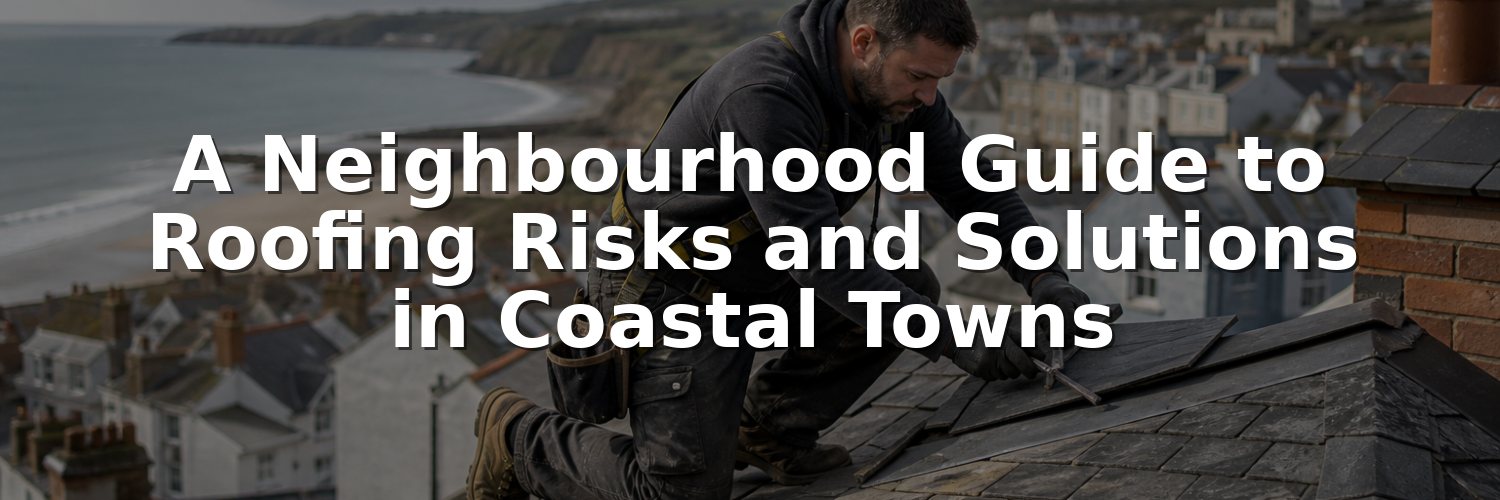
Coastal properties face unique challenges: salt air, wind-driven rain, storms and rapid temperature changes all take their toll on roofs. This guide helps homeowners, landlords and property managers spot local risks, choose suitable materials and set out a practical maintenance plan to protect buildings and reduce long-term costs.
Common roofing risks for coastal properties
Living by the sea brings specific hazards to roofs that don’t affect inland properties as much. Knowing what to look for helps you act early and avoid escalation.
- Salt corrosion: Metal fixings, flashings and gutters corrode faster near the coast, reducing lifespan and performance.
- Wind uplift and storm damage: Strong gusts can lift tiles, slate and poorly secured flat roofing membranes, leading to leaks and structural issues.
- Driving rain and penetrating damp: Sea spray and angled rain increase the risk of moisture ingress at roof-to-wall junctions and around chimneys and skylights.
- Moss and biological growth: Humid, salty conditions encourage moss and algae on tiles, which trap moisture and damage surfaces over time.
- UV and thermal stress: Intense sunlight and rapid temperature swings cause thermal movement in materials and can degrade coatings and sealants.
Choosing the right roofing materials for the coast
Select materials and components that resist salt, wind and moisture. Your choice depends on the building type and budget, but prioritise durability and low maintenance.
- Slate roofing: Natural slate performs well in coastal environments — highly durable, low porosity and long lasting.
- Tile roofing: High-quality clay tiles with appropriate fixings offer good wind resistance; consider tiles with anti-frost and anti-salt specifications.
- Metal roofing: Choose coated or stainless steel/aluminium systems with marine-grade fasteners to resist corrosion.
- Flat roofs: EPDM or GRP (fibreglass) membranes are robust choices for low-pitch areas; make sure detailing and edge terminations are excellent.
- Roof coatings and waterproofing: UV-stable coatings and specialist waterproofing help extend the life of existing roofs and improve resistance to salt spray.
Inspection and maintenance: a coastal schedule
Routine checks and proactive upkeep stop small problems becoming expensive. Tailor frequency to exposure: high-exposure sites need more visits.
- Annual professional inspection: A trained roofer should inspect flashings, gutters, fixings and the condition of membranes or tiles at least yearly.
- After-storm checks: Inspect for lifted tiles, damaged flashings, clogging gutters and loose fixings after any severe weather or gale.
- Gutter and downpipe maintenance: Clear salt-warped debris, check joints and replace corroded metal gutters sooner rather than later.
- Moss and algae control: Regular cleaning, soft-brushing and moss removal protect tiles; avoid aggressive treatments that damage surfaces.
- Fastener and flashing replacement: Replace corroded nails, screws and lead or metal flashings with corrosion-resistant alternatives.
Practical upgrades that improve resilience and energy efficiency
Targeted upgrades can both protect your property and lower running costs. Many are straightforward to plan alongside repair or re-roofing work.
- Improved insulation: Upgrading loft insulation reduces heat loss, helps prevent condensation and increases comfort.
- Ventilation systems: Proper ventilation reduces condensation and mould risk, particularly in tightly sealed coastal homes.
- High-performance membranes: Breathable membranes and improved underlays add a secondary barrier against wind-driven rain.
- Storm-proof fixings: Use wind-rated clips, hooks and mechanical fixings for tiles and slates in vulnerable locations.
- Solar integration: If installing solar panels, choose roof-integrated systems that maintain watertight detailing and use corrosion-resistant mounts.
How to choose a local roofer for coastal work
Experience with local conditions matters. Use these checks when selecting a contractor to ensure quality and long-term performance.
- Local expertise: Choose roofers used to coastal projects — they’ll understand salt damage, wind uplift and suitable materials. Roofing, Roofers and Roofs works across coastal and inland regions and can advise on appropriate solutions.
- Material knowledge: Ask about marine-grade fixings, coatings and recommended membranes for seaside exposure.
- Inspection tools: Confirm the company offers thorough surveys, including drone roof inspections for hard-to-reach areas and detailed reports.
- Maintenance plans and emergency call-outs: A proactive plan with rapid response after storms reduces long-term repair bills.
- Check local case studies: Look for examples of similar coastal jobs; many local firms publish project pages — for example, regional directories such as Bristol roofers or specialised sites like Blackpool Roofs can give an idea of approaches used nearby.
Local resources and further reading
For property managers and landlords seeking tailored regional guidance, local pages and specialists are helpful starting points. If your property is in a northern coastal town you might compare approaches used by local Sunderland roofers or consult wider regional sources like Derby and Manchester roofing sites for examples of contemporary materials and detailing.
Roofing, Roofers and Roofs can help you assess exposure, recommend materials and set up regular inspections or emergency plans suited to coastal conditions. Early investment in the right specification pays off with fewer leaks, lower maintenance and a longer-lasting roof.